Inter-University Accelerator Centre
New Delhi, Delhi Division, IN
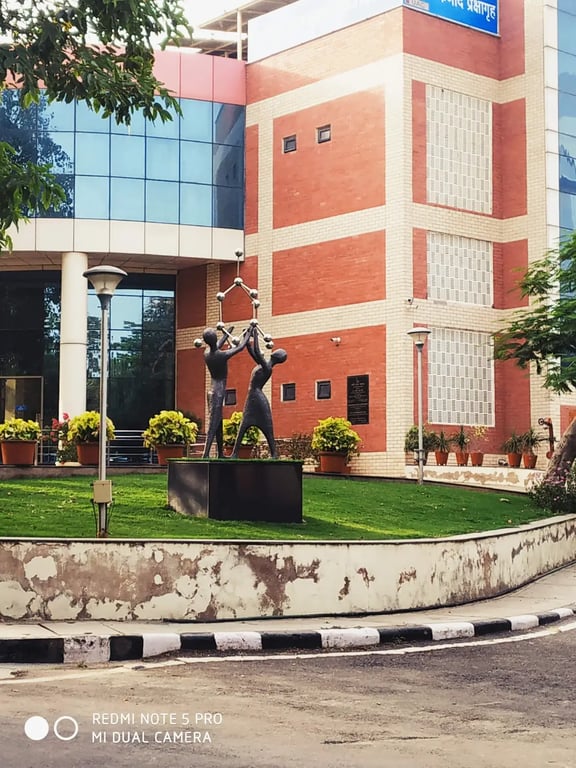
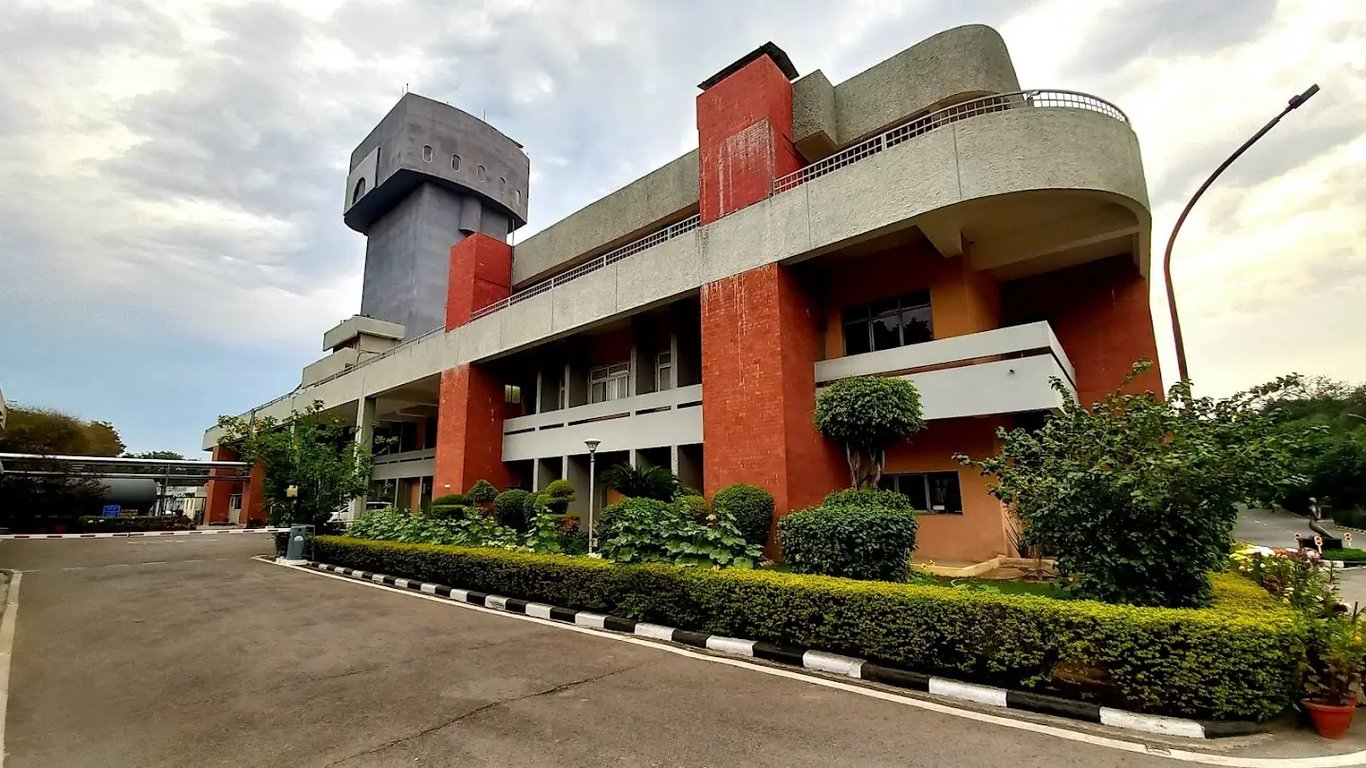
- AddressAruna Asaf Ali Marg, Vasant Kunj, New Delhi, Delhi, India, New Delhi, Delhi Division
- CountryIN
- Typeschool_university
- Websitehttp://www.iuac.res.in/
The Inter-University Accelerator Centre (IUAC) located at Aruna Asaf Ali Marg, Vasant Kunj, New Delhi, offers various facilities for meetings, conferences, and events. While IUAC primarily focuses on scientific research and development, it does provide some meeting and conference spaces that can be utilized for events. Here is a detailed description of the available facilities:
Meeting and Conference Rooms
- Conference Rooms at IUAC:
- Capacity: The IUAC has a conference room with seating for 30 people, with desks, and can accommodate up to 60 people in auditorium style.
- Services: The room can be opened out into one open space for larger events such as receptions. The IUAC also supports in-country needs, including connections, guidance, and the use of meeting spaces, offices, and technology.
- IU India Gateway:
- Capacity: The IU India Gateway has two conference rooms that can be combined to accommodate larger events.
- Services: These rooms support various activities, including workshops, symposia, public talks, and artistic performances. The gateway also offers funding mechanisms to support these activities, with matching support of up to $5,000 for events held at IU's Global Gateway offices.
Other Event Facilities
- Library:
- The library at IUAC is open round the clock and provides a unique facility for researchers and students. It has a computerized book catalog and can be searched through the library intranet. This facility is available for all users, including those from various universities and institutions.
- Target Laboratory:
- This laboratory supports the preparation of thin films and targets required for experiments in Nuclear Physics, Atomic Physics, and Materials Science. It prepares more than 100 thin films and targets per year, including free-standing carbon foils used as strippers for the 15UD Pelletron accelerator.
- Detector Laboratory:
- The Detector Laboratory provides infrastructure and support for the development of radiation detectors for various research experiments. It focuses on low-energy heavy-ion detectors and is involved in the research and development of multi-channel readout electronics for strip detectors, fast timing pre-amplifiers, and pulse shaping amplifiers.
- Cryogenics:
- The cryogenic system at IUAC is part of the heavy-ion Rf-superconducting LINAC booster project for the 15UD Pelletron accelerator. It includes several superconducting quarter-wave resonators made of niobium, which require liquid helium for operation.
- Data Support Laboratory:
- This laboratory provides support for all Nuclear Physics and Atomic Physics users in acquiring and analyzing experimental data. It designs, develops, and maintains data acquisition systems, including VME-based systems with commercial analog-to-digital converters (ADC), time-to-digital converters (TDC), scalar, charge-to-digital converters (QDC), and indigenous DAQ software.
- Electronics and RF Laboratory:
- This laboratory is involved in nuclear electronics, radio frequency electronics, and electronics industry links, supporting various research activities.
- High Performance Computing Laboratory:
- The High Performance Computing Laboratory at IUAC provides access to high-performance computing resources, including the SIESTA software suite. It supports computational research in various fields.
- Teaching Laboratory:
- The Teaching Laboratory at IUAC is equipped with the ExpEYES framework, which converts a PC into a science laboratory. It supports affordable laboratory equipment and training for teachers as part of IUAC's outreach program.
Summary
While IUAC primarily focuses on scientific research, it offers some meeting and conference spaces that can be utilized for events. The available facilities include a conference room with seating for 30 people, which can accommodate up to 60 people in auditorium style, and two conference rooms at the IU India Gateway that can be combined for larger events. Additionally, IUAC has various laboratories and facilities that support research activities, including the Target Laboratory, Detector Laboratory, Cryogenics, Data Support Laboratory, Electronics and RF Laboratory, High Performance Computing Laboratory, and Teaching Laboratory. These facilities provide a comprehensive environment for both research and educational activities.